
90 Days Sober Stories: Different Ways a Milestone Can Feel
Fictionalized Recovery Stories: The stories in this article are fictionalized composites inspired by common recovery experiences. Names, timelines, locations and identifying details have been changed or combined to protect privacy. They are not medical case studies and should not be read as a timeline of what everyone will experience.
Six people can reach 90 days sober and have six completely different reactions. One feels proud. One feels almost nothing. One is relieved, another is restless, and someone else is quietly afraid that celebrating will tempt fate.
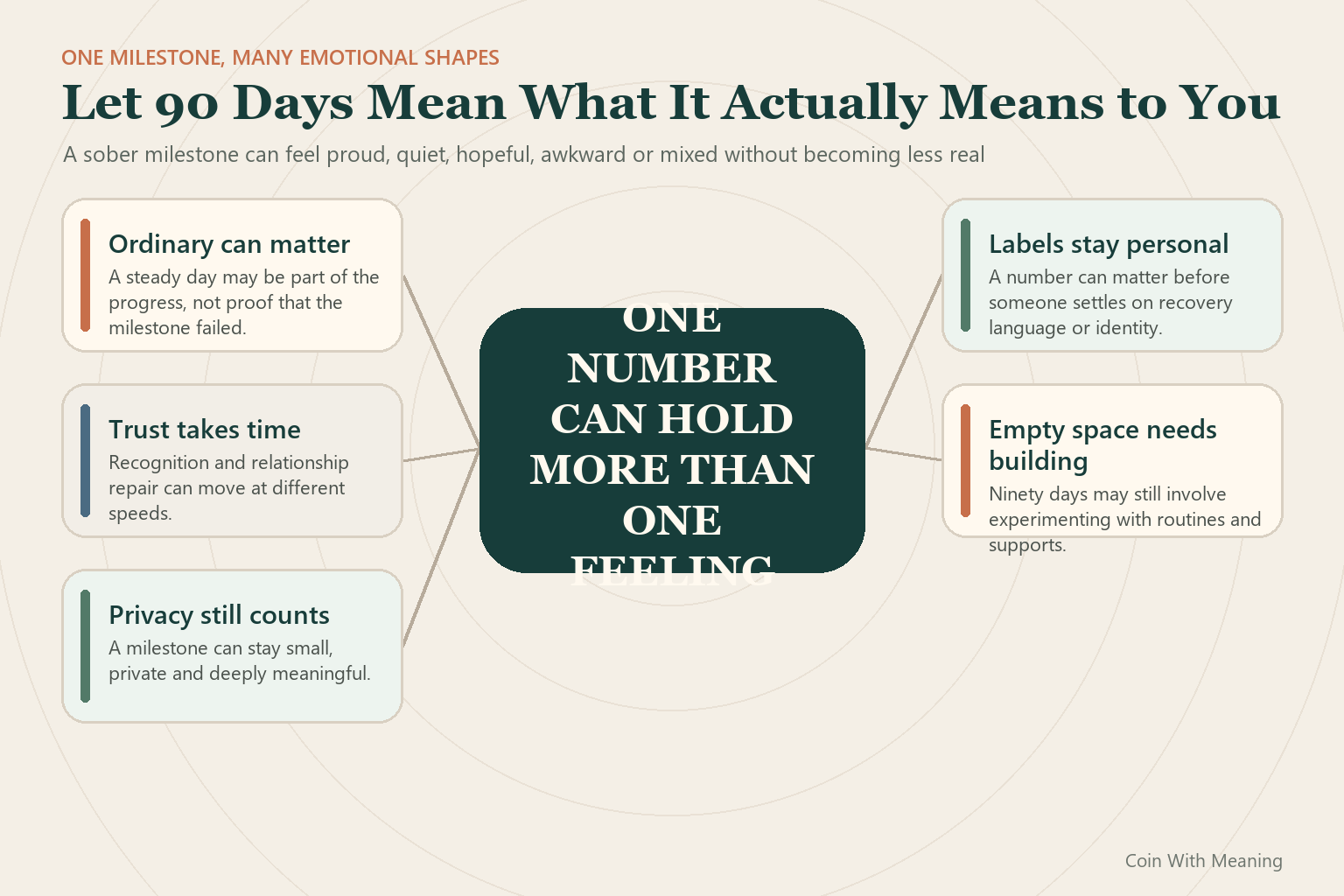
That range is the point. A milestone can be meaningful without producing one approved emotion.
Maya: “I Thought Day 90 Would Feel Bigger”
Maya wakes up expecting the date to announce itself somehow. Instead, the dog needs to go out, the coffee maker needs water, and work is still work.
For a moment she feels disappointed. Ninety days had looked enormous from Day 4. Now that she is here, the morning feels almost suspiciously normal.
Later she realizes that normal may be part of what changed. She buys herself a book she has wanted, writes the date inside the cover, and lets that be enough.
Reframe: A quiet milestone is not an empty milestone. Sometimes progress becomes less dramatic because it has started becoming daily life.
Daniel: Proud of the Count, Unsure About the Label
Daniel knows exactly how many days it has been. He likes the number. He does not know whether he wants to introduce himself as “sober,” “in recovery,” or anything else.
His brother avoids forcing the question. He gives Daniel a short card that says, “Ninety days. I know that took work. Proud of you.”
Daniel keeps the card because it recognizes the effort without assigning him an identity he has not chosen.
The milestone belongs to the person, and so does the language around it.
Lena: 90 Days Sober, but Trust Is Still Being Rebuilt
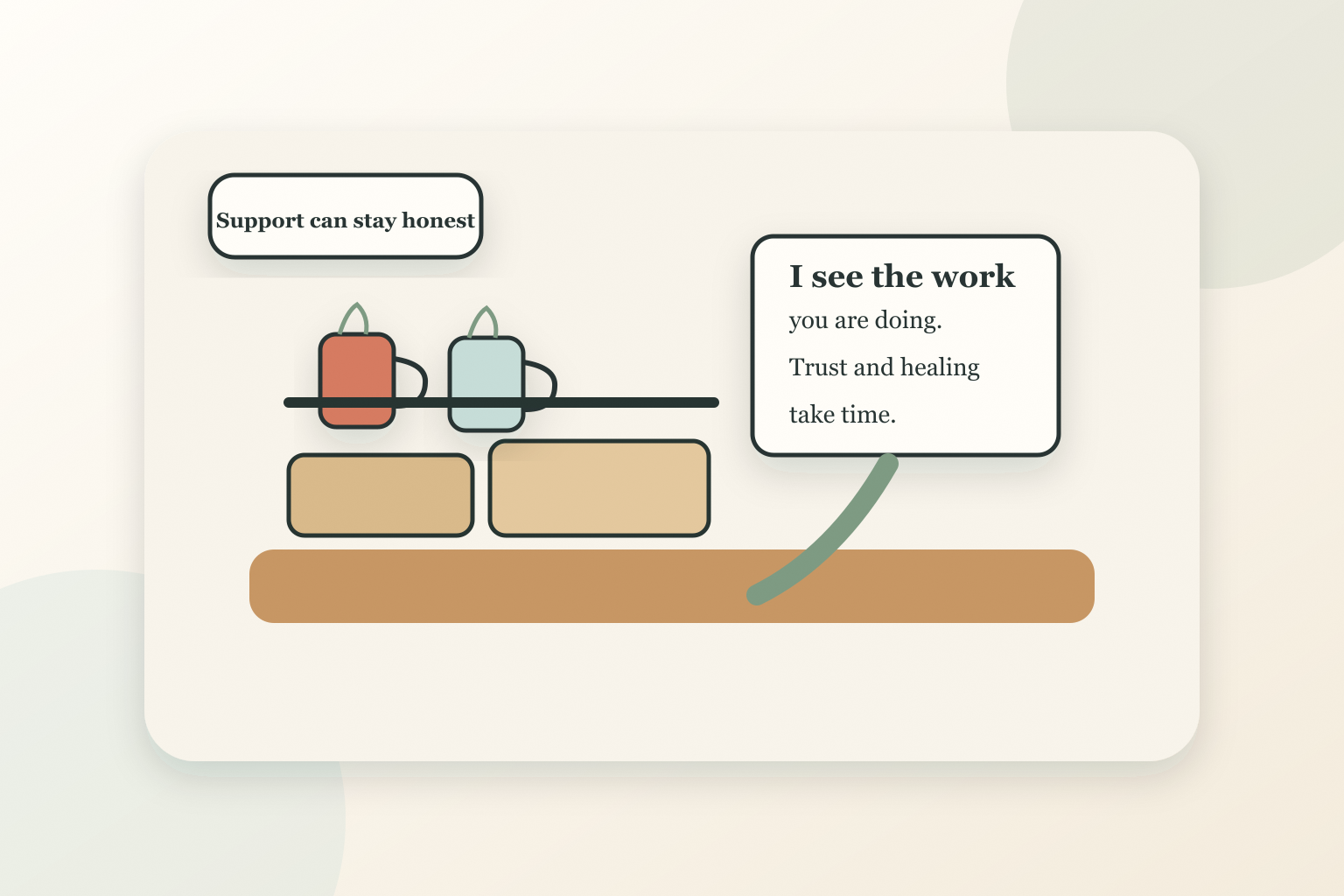
Lena is proud of 90 days, but she is also painfully aware that some relationships have not caught up with the calendar. Her partner is warmer than before, yet still cautious. A family member still checks in with a tone that feels more like inspection than conversation.
On the milestone evening, Lena and her partner order takeout. There is no grand speech. Her partner leaves a note beside the plates: “I see what you are doing. We can keep rebuilding slowly.”
That word—slowly—feels more honest than promising everything is repaired.
A sobriety milestone can deserve recognition even when relationships are still healing.
Marcus: The Hard Part Is Not the Party. It Is the Empty Time
Marcus expected social pressure to be his biggest problem. Instead, Sunday afternoons are harder. He used to fill them automatically. Now there are hours with nowhere obvious to go.
By 90 days, he has tried walking trails, cooking badly, a community class, and one hobby that lasted exactly nine days. Not all of it stuck.
But something did change: boredom no longer automatically means he has made the wrong choice. Sometimes it is simply an empty space that needs experimenting with.
Recovery can involve building a life, not just removing one habit. That process can be awkward before it becomes familiar.
Priya: The Milestone Matters, but Privacy Matters Too
Priya does not want a social post. Most people at work do not know she stopped drinking, and she wants to keep it that way.
She marks 90 days with a small keepsake engraved only with a date. To anyone else it looks like a private symbol. To her, that is exactly what it is.
Privacy is not shame. Sometimes privacy is simply ownership.
Aaron: “If I Celebrate, Will I Get Too Comfortable?”
Aaron has spent the first three months staying alert. When a friend suggests celebrating Day 90, his first reaction is discomfort. He worries that pride will turn into complacency.
They keep the plan simple: breakfast at a diner, then Aaron goes to the support meeting he already planned to attend. The milestone is acknowledged without pretending the work is finished.
Reframe: Recognition and vigilance are not opposites. You can honor progress and still protect what is helping.
What These Different 90-Day Stories Have in Common
None of these fictionalized stories offers a template for what Day 90 should look like. Together, they point to a few useful truths:
- A milestone can feel ordinary and still matter.
- A day count does not automatically repair relationships.
- People can value sobriety without using the same identity labels.
- Boredom, uncertainty, pride, relief, and caution can all coexist with progress.
- Recognition works best when it respects privacy and preference.
- The next step may matter more than producing the “right” milestone emotion.
How to Approach Your Own 90 Days
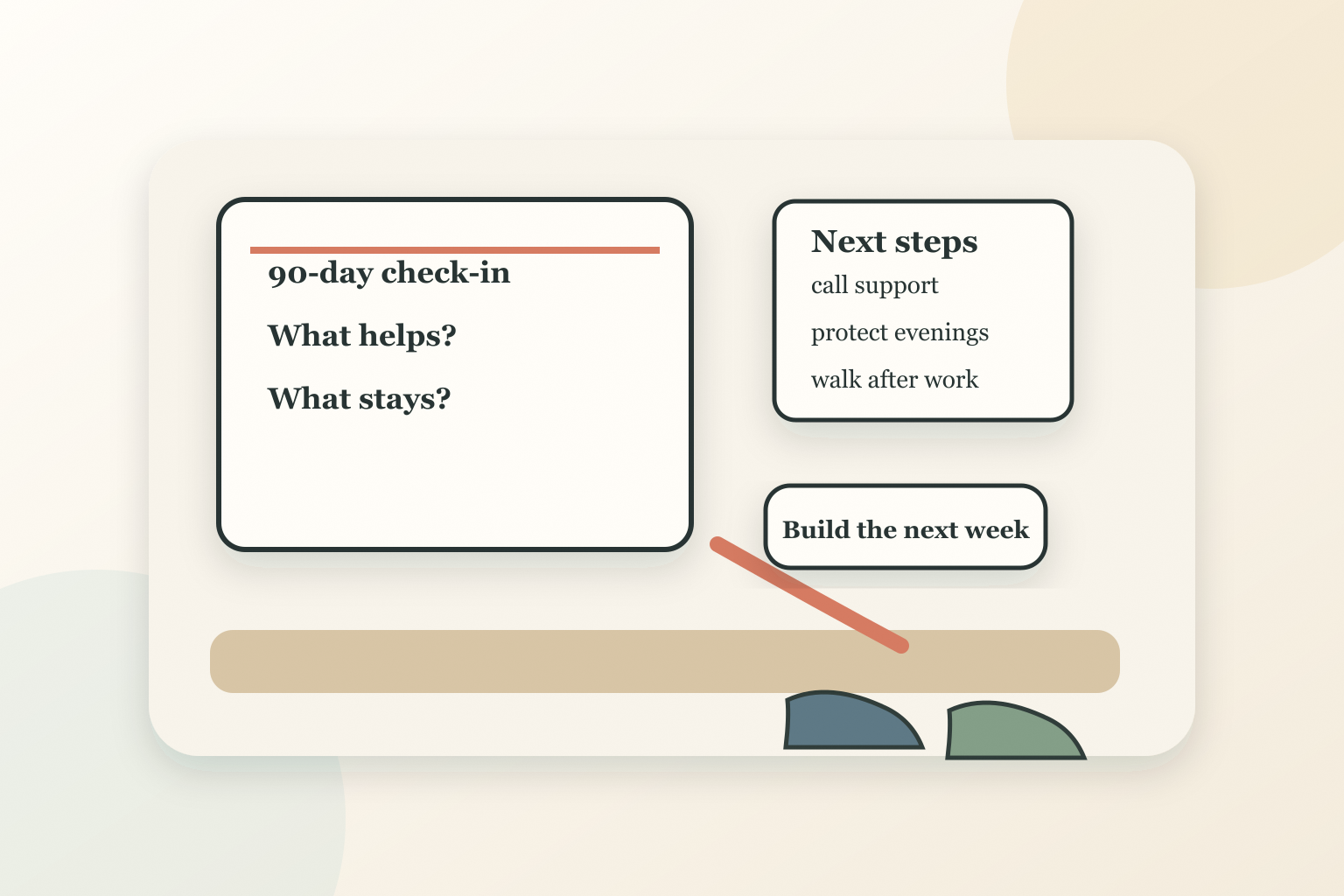
If your own milestone is approaching, you do not need to copy somebody else's celebration. Start smaller:
- What changed that I might be overlooking because it is now normal?
- What still feels difficult?
- Which routine or person genuinely helps?
- Do I want this date public, private, or somewhere in between?
- Would I rather mark the past 90 days or plan something supportive for the next 30?
You can answer those questions in a journal, on a walk, with a trusted person, or not all at once.
If You Are Supporting Someone at 90 Days
Do not assume the milestone automatically calls for a surprise party, public praise, or a detailed retelling of what came before.
Try something simpler:
“I remember this date matters. Would you like to do anything for it?”
If they want a card, keep the message focused on recognition rather than prediction. You can find examples in 90-Day Sobriety Card Messages.
An Optional Keepsake Can Make the Date Tangible
Some people like a physical object because recovery is otherwise difficult to hold in your hand. A journal entry, photo, dated book, small coin, token, or personalized keepsake can mark the milestone without becoming the center of it.
For private milestones, a number, date, initials, or symbol may feel better than explicit recovery language. A commercial keepsake is symbolic; it is not treatment and should not be presented as an official A.A. or N.A. item unless authorized.
Frequently Asked Questions
Are these real recovery stories?
No. They are fictionalized composite stories created from common themes and situations. Names, details, and timelines are invented or combined to protect privacy and avoid presenting an individual story as universal.
Is it normal for 90 days sober to feel ordinary?
Yes. A milestone can feel proud, emotional, flat, quiet, complicated, or ordinary. There is no required emotional response.
What if relationships are still difficult at 90 days?
A day count does not automatically rebuild trust or resolve older problems. Relationships can move on different timelines. Honest communication, boundaries, and appropriate support may still matter.
Should I celebrate 90 days if I am worried about becoming complacent?
You can recognize progress without treating the milestone as a finish line. A quiet meal, reflection, keepsake, or continuation of your normal support routine can hold both pride and care.
What if I want to keep my sobriety date private?
That is completely valid. Use private language, a coded symbol, a date-only keepsake, or no physical marker at all. The milestone does not require public disclosure.
Continue the milestone path: 90 Days Sober: Meaning | 90-Day Reflection | When Nothing Feels Different | Celebrate 90 Days
Related Reading
- What Does 90 Days Sober Mean?
- A 90-Day Sobriety Reflection: 12 Questions for the Next Chapter
- 90-Day Sobriety Card Messages
- Meaningful 90 Days Sober Gift Ideas
Editorial Note
These are fictionalized recovery stories, not testimonials, medical cases, or predictions of what recovery should look like. Multiple recovery pathways and experiences are valid.
Sources
- Coin With Meaning Topic Master — RT-106.
- Coin With Meaning 90-Day Priority Queue — Queue Rank 53.
Final Thought
Ninety days can be a loud milestone or a quiet one. It can feel like a turning point, a normal Tuesday, or both at once.
The number does not need to tell the whole story. It only needs to mark a real part of it.